
New research shows that as few as 1% of wild Atlantic salmon are returning to spawn
A new scientific study by the Game & Wildlife Conservation Trust (GWCT) shows the survival of wild Atlantic salmon at sea has declined dramatically. In recent years, on average, only 3% of fish leaving the river have returned to spawn and this figure has regularly dropped below 1%.
The study, based on the Trust’s long-term data over more than 20 years, also revealed that overwinter survival of salmon in the river in the first phase of life was 80% higher than at sea, confirming that the marine environment is now a critical bottleneck in the salmon life cycle.
Since 2005, researchers at the GWCT’s monitoring station at East Stoke on the River Frome in Dorset have tagged around 10,000 juvenile salmon (called parr) annually, allowing individual salmon to be tracked as they grow into smolts, which migrate out to sea in spring. On their journey downstream the tagged fish are then caught again, measured and released. Detection stations record when they leave the river, and when surviving adults return from the sea to spawn. So far, this year numbers are higher than average, but still only 111 have been recorded as returning.
Whereas around 3% come back after one winter at sea (known as one-sea-winter fish), even fewer, about 1.5%, return after two winters at sea. In some years, survival rates were even lower, with as few as 0.4% of one-sea-winter fish and 0.7% of two-sea-winter fish making it back. Overall, rates of survival at sea declined noticeably over the course of the study.
GWCT head of fisheries Dylan Roberts who oversaw the project said: “We believe declining marine survival is driven by warming seas affecting feeding opportunities for salmon at sea. We’re also very concerned about the potential high risk of young salmon being accidentally caught in commercial factory fishing nets. In this context, improving river habitats for salmon is even more crucial. We know from our research that the largest, fittest smolts are three times more likely to return as adults. So, if you get the habitat right, this can help improve the very low marine survival we have been witnessing in recent years.”
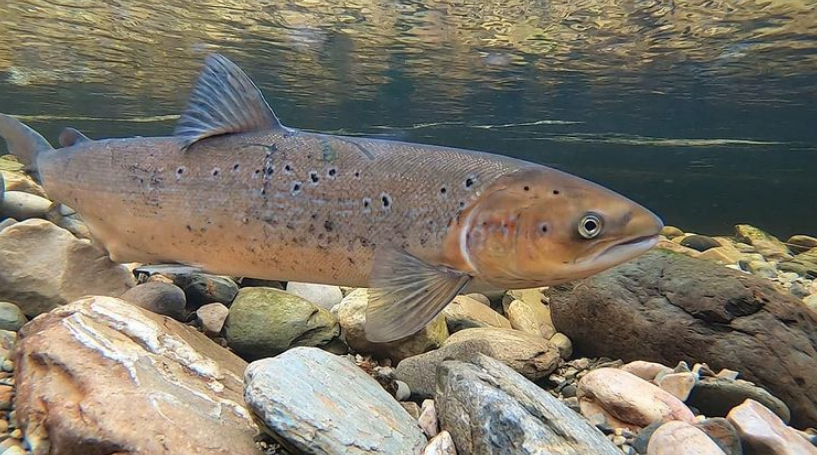
Photo credit: Chris Conroy
In the river system, 12% juvenile salmon survived the transition from parr to smolt, with no clear long‑term trend over the study period. However, in recent years the number of parr being caught for tagging has dropped dramatically from 10,000 in 2023 to 3,226 in 2025.
While the reasons for the decline of salmon in freshwater environments are comparatively well understood, problems at sea are harder to ascertain. It is likely that ocean-scale processes, such as melting sea ice with associated changes in temperature, food availability and predator interactions, are playing a key role. This new research suggests as well as improving water quality and habitats in rivers, greater legal protection at sea is vital to prevent the extinction of wild Atlantic salmon, which is now red listed.
The GWCT is one of the founding members of the Missing Salmon Alliance, a group of conservation organisations which is calling on Government to better enforce protection of marine migration routes and feeding areas, reduce pressures such as bycatch, and fund research into addressing the long‑term impacts of climate change on the ocean environment. While marine management is complex, similar approaches are already used for other threatened and commercially important species, suggesting that more action for salmon is needed.
Dylan Roberts said: “This latest indication of the dire state of the UK’s wild Atlantic salmon population comes at a time when the species has been proposed to feature on the Bank of England’s new notes, indicating its iconic status. What we really need is a concerted national effort to save this much-loved species before it’s too late.
“As well as restoring our rivers, we need to look at the risk of salmon being caught by boats fishing for mackerel, herring and whiting in the commercial fisheries in the North Atlantic. Without placing greater emphasis on protecting them both at sea and in rivers, we will never reverse their decline.”
For a summary of the study visit The missing salmon: What happens at sea? - Game and Wildlife Conservation Trust